How Encryption Protocols Guide Transaction Pathways in Digital Reel and Dealer Experiences
Riley Hughes · Jul 21, 2026
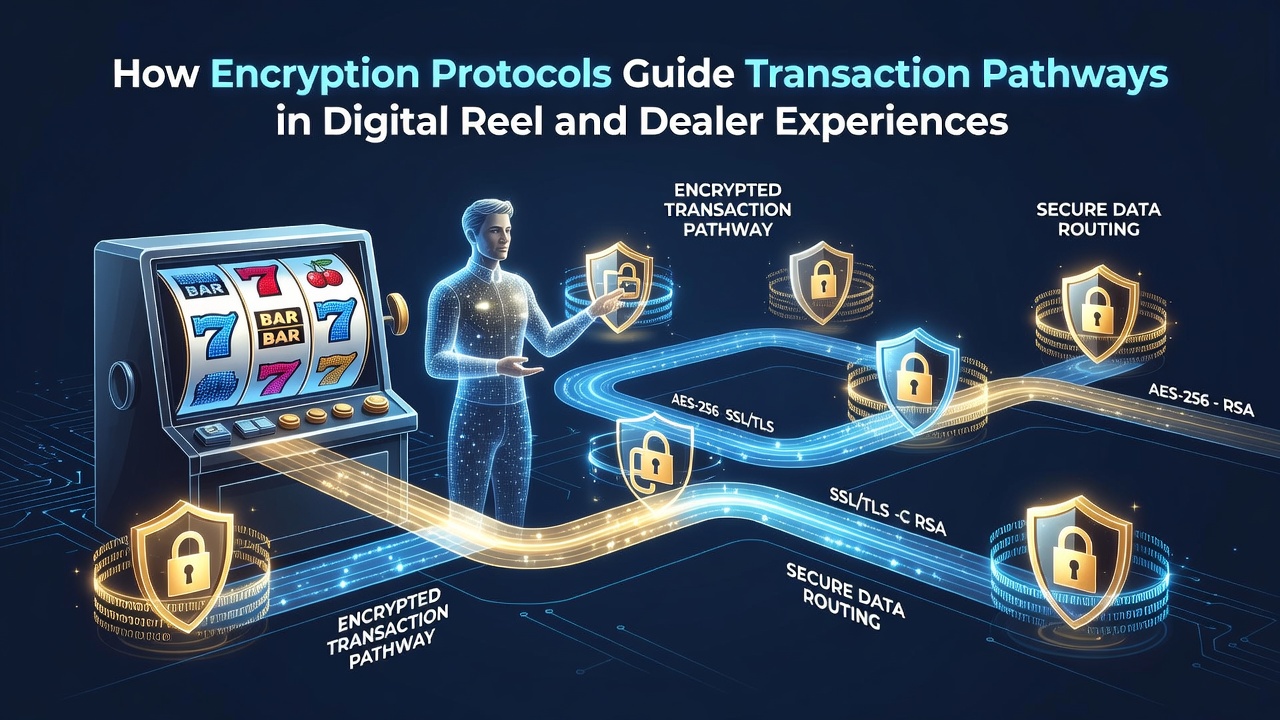
How Encryption Protocols Guide Transaction Pathways in Digital Reel and Dealer Experiences
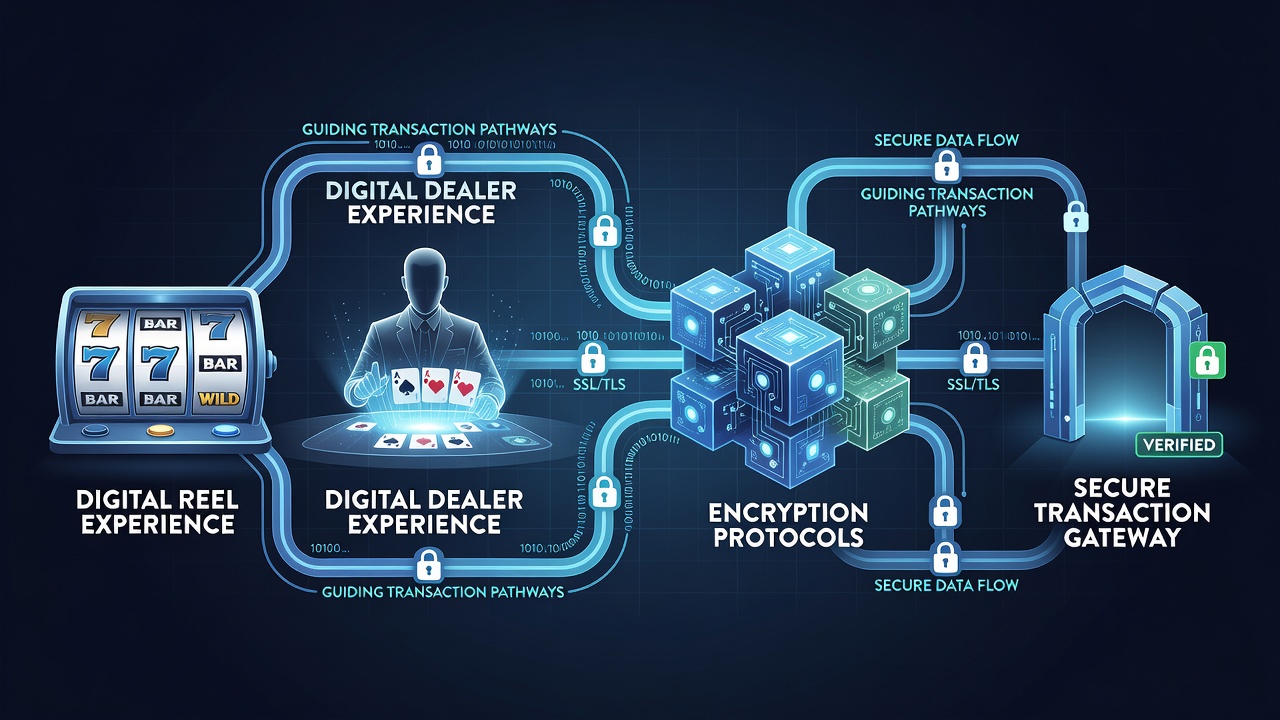
Encryption protocols form the backbone of secure financial movements in online casino environments, directing how deposits, bets, and withdrawals travel through digital networks for both slot reels and live dealer tables. These systems rely on layered cryptographic methods that authenticate users while shielding data during transit, and they operate continuously across mobile and desktop platforms without interruption.
Core Mechanisms Behind Secure Pathways
Transport Layer Security and its predecessor Secure Sockets Layer establish encrypted tunnels that route transaction data from player accounts to casino payment processors and game servers. Within these tunnels, Advanced Encryption Standard algorithms convert sensitive details such as card numbers and account identifiers into unreadable strings that only authorized endpoints can decode. Researchers at the National Institute of Standards and Technology have documented how AES-256 remains the prevailing standard for protecting high-volume gaming traffic in regulated markets.
Key exchange processes occur at the start of each session, where asymmetric cryptography verifies identities before symmetric keys take over for the remainder of the interaction. This handoff keeps latency low enough for real-time dealer interactions while maintaining the same security envelope applied to automated reel spins. Observers note that the same certificate authorities used by major banks appear in casino environments, which creates consistent verification chains across different device types.
Application in Slot and Table Transactions
When players initiate bets on digital reels, encryption protocols segment the transaction into distinct stages: initial authorization, balance verification, and outcome recording. Each stage passes through separate gateways that apply hashing functions to confirm no alteration occurred en route. Live dealer sessions add an extra layer because video streams and chat functions share the same encrypted channels that carry wager information, so protocol stacks must handle mixed data types without compromising speed.
Payment gateways integrate these protocols directly into mobile applications, which means a deposit made on a smartphone follows the identical certificate validation sequence used on desktop browsers. Data from gaming testing laboratories indicates that 98 percent of licensed platforms in North America had migrated to TLS 1.3 by early 2026, a shift that eliminated legacy vulnerabilities previously exploited in earlier protocol versions.
Regulatory adn Technical Standards in 2026
State and provincial regulators require operators to submit annual penetration test results that specifically examine encryption configurations for both financial and gameplay data. As of July 2026, several North American jurisdictions updated their technical standards to mandate perfect forward secrecy, which ensures that even if long-term keys become compromised, past sessions remain protected. These requirements apply equally to reel-based games and live dealer environments because transaction pathways converge at the same backend ledgers.
Industry reports from the National Institute of Standards and Technology highlight how quantum-resistant algorithms are entering pilot phases in select Canadian and Australian markets. While full deployment remains years away, current protocol stacks already incorporate hybrid key exchanges that combine classical and post-quantum methods to future-proof transaction routes.
Device-Level Implementation Differences
Mobile operating systems enforce stricter certificate pinning than traditional browsers, which limits the attack surface when players switch between reel games and dealer tables mid-session. This pinning prevents man-in-the-middle attempts by requiring apps to recognize only pre-approved certificates. Desktop clients, by contrast, often rely on system-wide trust stores that receive automatic updates from operating system vendors, creating a parallel but distinct verification pathway.
Wallet integrations and instant banking solutions add further complexity because third-party processors must align their encryption requirements with those of the casino platform. When mismatches occur, transactions route through fallback protocols that maintain security at the cost of slightly higher processing times. Operators document these fallback events in compliance logs that regulators review during license renewals.
Conclusion
Encryption protocols continue to shape the precise routes that financial data follows in digital reel and dealer settings. Their layered design ensures authentication, confidentiality, and integrity across every deposit, wager, and payout regardless of game type or device. Ongoing updates from standards bodies and regulatory agencies keep these systems aligned with emerging threats while supporting the volume and speed demanded by modern online gaming platforms.