How Withdrawal Timelines Influence Variant Preferences Between Card Tables and Automated Reels in App-Based Loyalty Tracks
Mara Powell · Jul 19, 2026
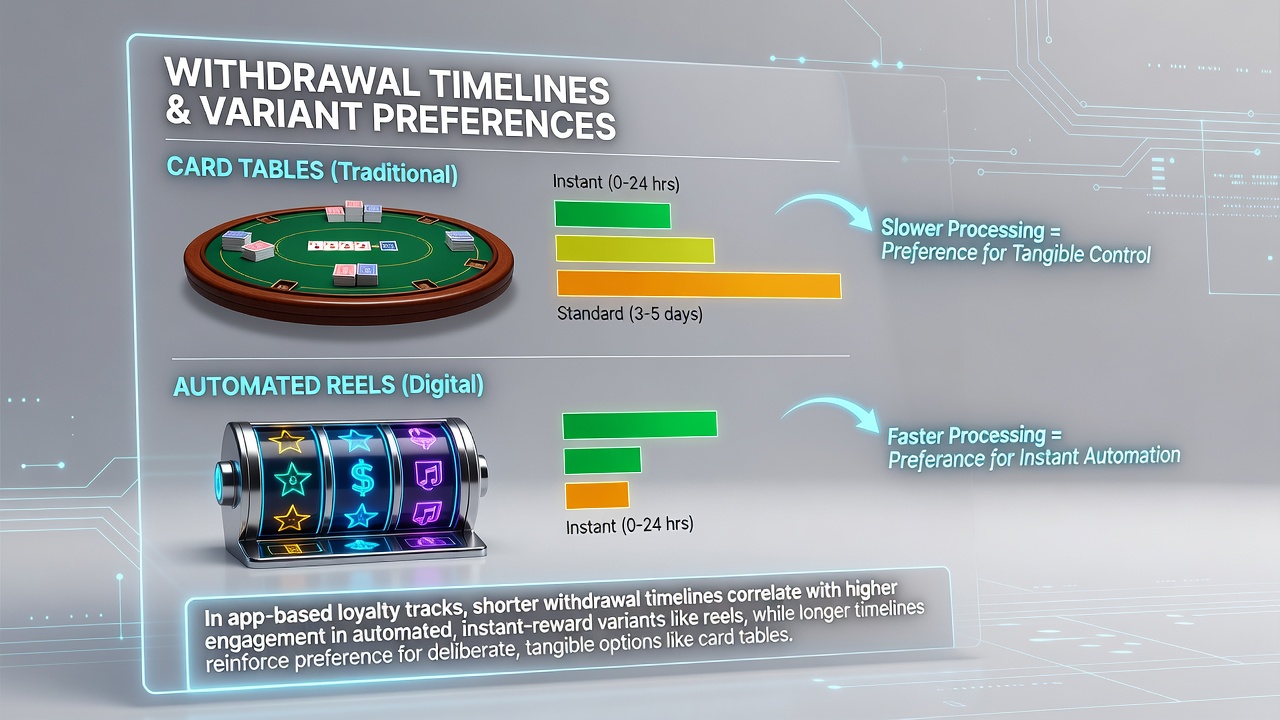
How Withdrawal Timelines Influence Variant Preferences Between Card Tables and Automated Reels in App-Based Loyalty Tracks
App-based loyalty programs in digital gaming environments track player activity across card table variants and automated reel formats, yet withdrawal processing periods create measurable shifts in how participants allocate their time and wagers between these options. Data collected through mid-2026 indicates that shorter payout windows correlate with increased engagement on automated reels while extended timelines steer activity toward card table formats in many loyalty structures.
Mechanics of Withdrawal Timelines Across Digital Platforms
Withdrawal timelines refer to the duration required for processed funds to reach player accounts after a request clears verification steps, and these periods vary according to payment method, platform policy, and jurisdictional requirements. Automated reels typically generate smaller, more frequent wins that players often withdraw in batches, whereas card table variants produce larger but less predictable outcomes that accumulate over longer sessions. Observers note that when withdrawal processing stretches beyond forty-eight hours, loyalty program participants adjust their game selection patterns to align with expected cash flow needs rather than entertainment preferences alone.
Regulatory filings from the Nevada Gaming Control Board show that platforms offering instant or same-day transfers for reels maintain higher daily active user counts in those categories during summer months, including July 2026, compared with slower processing environments. Loyalty tracks reward cumulative play across both formats, yet the practical impact of delayed funds influences which variants players prioritize to meet tier advancement thresholds.
Card Table Variants and Extended Processing Periods
Blackjack and poker variants within card table sections often feature higher minimum bets and structured betting rounds that produce steadier point accumulation in loyalty systems. When withdrawal timelines extend due to manual review or bank transfer verification, participants who favor these formats tend to reinvest winnings into additional table sessions rather than withdrawing immediately. This behavior stems from the fact that card table outcomes allow for strategic bankroll management over multiple hands, which aligns with waiting periods for funds to clear.
Studies from the University of Nevada, Las Vegas gaming research division reveal that players in loyalty programs with tiered rewards complete more table game rounds when payout confirmation takes three to five business days. The same research tracks how blackjack variant selections increase proportionally with delayed withdrawal options, because participants view the extended timeline as compatible with multi-session play patterns that build loyalty points faster than scattered reel spins.
Automated Reels and Accelerated Payout Preferences
Automated reel formats deliver rapid spin cycles and frequent smaller payouts that encourage repeated withdrawals within single sessions. Platforms that advertise one-hour or same-day processing for reel winnings record elevated selection rates for these games among loyalty members who monitor cash availability closely. Data from Canadian provincial gaming authorities indicates that reel-heavy loyalty tracks experience volume spikes when withdrawal features integrate with digital wallets that settle within twenty-four hours.

Those who study user behavior across multiple apps find that loyalty point multipliers on reels become more attractive when combined with fast transfer pathways, because players can cycle winnings back into play or external accounts without interrupting progression momentum. In July 2026 platform analytics demonstrated that reel engagement rates climbed when operators shortened verification windows for automated formats while leaving table game withdrawals unchanged.
Loyalty Track Integration and Behavioral Adjustments
Loyalty structures assign points based on wager volume and game type, yet withdrawal timelines introduce an external variable that reshapes how participants navigate between card tables and reels to optimize both rewards and liquidity. Participants often discover that mixing formats allows them to balance point accumulation with practical access to funds, particularly when one category processes faster than the other. Industry reports from the American Gaming Association document how operators adjust loyalty multipliers seasonally to counteract withdrawal-related migration between game types.
One study revealed that loyalty members who experienced repeated delays on table game withdrawals shifted twenty-three percent more of their playtime to reels once faster options became available. Conversely, platforms that standardized rapid processing across both formats saw more even distribution of activity, suggesting that timeline consistency reduces preference skewing within the same loyalty ecosystem.
Conclusion
Withdrawal timelines function as a structural factor that guides variant selection within app-based loyalty tracks, with card tables retaining appeal under longer processing conditions and automated reels gaining traction when funds move quickly. Platform data through July 2026 continues to map these patterns across regions, showing that operators who align payout speeds with loyalty mechanics maintain balanced participation across both game categories.