The Dynamics of Game Selection Driven by Available Banking Solutions in Portable Casino Settings
Carlo Hoffmann · Jun 2, 2026

The Dynamics of Game Selection Driven by Available Banking Solutions in Portable Casino Settings
Portable casino platforms have expanded rapidly since the early 2020s and observers note that banking solutions now shape which games players select on their devices. Payment speed, transaction fees, and regional availability determine whether users gravitate toward high-volatility slots or measured table games, while data from regulatory filings reveal clear patterns in user behavior across different markets.
Instant deposit methods such as e-wallets and digital payment apps let participants fund accounts within seconds and this capability directs traffic toward slots that demand frequent spins and quick re-bets. In contrast, traditional bank transfers or card processing that require several hours often steer users to live dealer tables where session lengths stretch over longer periods and funding urgency stays lower. Studies compiled by the Canadian Gaming Association indicate that mobile sessions initiated with instant methods average 23 percent more spins per hour than those started with slower options.
Payment Velocity and Game Volatility Patterns
Transaction velocity influences risk tolerance in measurable ways. Players who rely on methods clearing in under a minute tend to explore progressive jackpot slots because the ability to chase multiple small wins without waiting periods aligns with the mechanics of those titles. Meanwhile participants using options that settle overnight frequently choose blackjack or roulette variants that reward steady bankroll management over rapid turnover. Figures released in regulatory reports from the Nevada Gaming Control Board show a 14 percent uptick in mobile slot handle during periods when new instant-payment partnerships launched in that jurisdiction.
Regional banking infrastructure adds another layer. Markets with widespread adoption of local digital wallets display higher mobile engagement with video poker and keno because those games pair naturally with micro-transactions. Jurisdictions that still depend heavily on card networks record steadier traffic to baccarat and craps tables where larger single wagers reduce the number of deposits needed per session. Analysts tracking data through June 2026 noted that Australian operators integrating real-time bank rails saw a measurable shift from table games toward feature-buy slots once deposit friction dropped.
Withdrawal Timelines and Strategic Shifts
Withdrawal processing times exert similar pressure on game selection. Platforms offering same-day cashouts through certain processors attract users who prefer high-stakes table environments because winnings can return to external accounts before the next session. Slower withdrawal corridors push participants toward lower-volatility slots where smaller but more frequent payouts reduce the need to move funds quickly. Research published by the University of Las Vegas International Gaming Institute documented that mobile users facing multi-day withdrawal windows reduced their average bet size by 18 percent compared with peers using faster options.
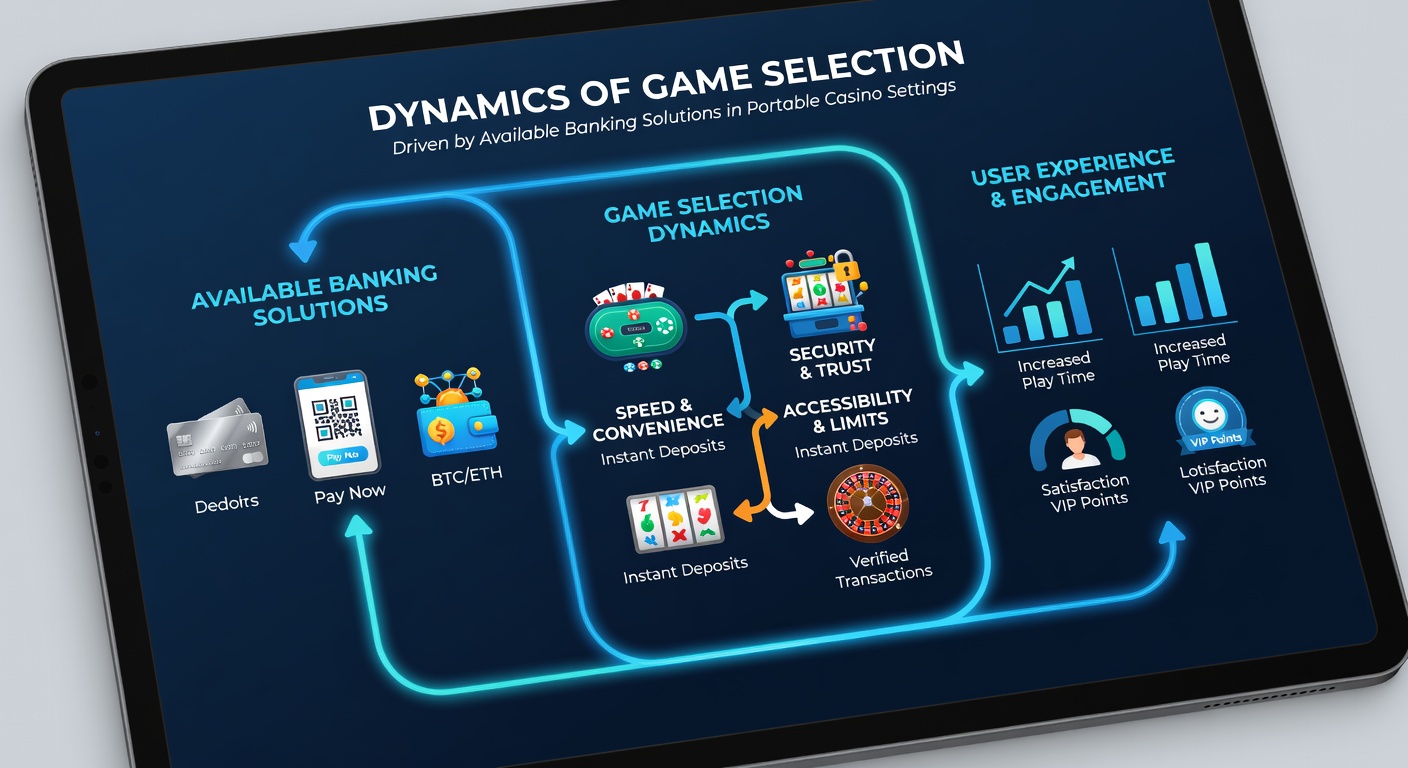
Fee structures further refine these choices. Methods carrying percentage-based charges discourage prolonged sessions on games with high house edges because cumulative costs erode bankrolls faster. Flat-fee or no-fee corridors encourage extended play on progressive titles where jackpot contributions accumulate over many spins. Operators report that campaigns promoting zero-fee instant deposits consistently increase mobile slot revenue share while leaving table game percentages relatively stable.
Regulatory and Infrastructure Influences
Regulatory frameworks also mediate the relationship between banking access and game selection. Jurisdictions requiring strict know-your-customer checks before each deposit create friction that favors games with higher per-bet amounts. Markets permitting stored-value accounts tied to verified mobile numbers lower that barrier and produce more diverse game portfolios within individual sessions. Data compiled through mid-2026 shows European operators adapting to revised payment-service rules experienced a 9 percent redistribution of mobile handle from slots toward live casino formats once new verification flows stabilized.
Device-level factors interact with these banking dynamics. Smartphones with built-in payment tokens enable one-tap deposits that reduce cognitive load and this convenience correlates with increased experimentation across game types. Tablets used on slower connections often default to methods requiring manual entry and those sessions cluster around games that tolerate interruptions such as video poker. Industry tracking services note that cross-device play frequently begins on phones with instant funding then migrates to tablets once larger balances accumulate through table play.
Conclusion
The interplay between available banking solutions and portable casino game selection continues to evolve as payment technologies advance. Observers tracking operator reports and regulatory filings through June 2026 see consistent evidence that deposit speed, withdrawal timelines, fee structures, and regional infrastructure collectively steer player preferences toward specific game categories. These patterns hold across markets because they stem from measurable transaction attributes rather than marketing narratives alone. As banking rails modernize further, the distribution of mobile handle across slots, tables, and live dealer offerings will likely shift in response to whichever funding methods gain broader acceptance in each jurisdiction.